You train consistently, eat enough protein, and get your sleep. But the mirror tells a different story. Before you blame genetics, find out what’s actually stalling your progress.
Key takeaway
The difficulty of building muscle after 30 has a well-documented hormonal basis in the scientific literature. The decline of HGH (Human Growth Hormone) reduces protein synthesis, impairs recovery, and promotes fat accumulation — regardless of how hard you train. This article explains the mechanism and presents a natural, evidence-backed alternative to stimulate HGH production without injections or a prescription.
The problem nobody explains at the gym
You increased training volume. You dialed in your diet. You sleep more. You manage stress. And yet, after months of consistent effort, the mirror shows far less than the work deserves.
The most common answer people get — “train heavier” or “fix your diet” — ignores a factor that science has been documenting for decades: your body’s physiology changes fundamentally after age 30, and the primary trigger of that change is hormonal.
This isn’t about discipline. It’s about biochemistry.
What HGH is — and why it’s central to building muscle
HGH — Human Growth Hormone — is produced by the pituitary gland and acts as the body’s master signal for building, repairing, and maintaining muscle tissue. It works both directly on muscle cells and through IGF-1 (Insulin-like Growth Factor 1), produced by the liver in response to HGH.
According to the endocrinological literature, HGH is responsible for:
The problem starts silently around ages 25 to 30: HGH production enters a progressive, irreversible decline — a phenomenon researchers call somatopause.
The numbers behind the decline — what science actually measures
14–15%
HGH decline per decade after age 30, per NCBI / Endotext
3–8%
Muscle mass lost per decade after age 30 (PMC / NIH)
30%
Of total muscle mass lost over a man’s lifetime, per Harvard Health
A study published in the Journal of Clinical Endocrinology & Metabolism (Toogood et al., 1996) documented that GH secretion declines by an average of 14% per decade of adult life. Research from NCBI shows that by age 55, men produce only 25 µg/kg/day of HGH — compared to peak levels of around 150 µg/kg/day during puberty.
The New England Journal of Medicine published the landmark Rudman et al. study in 1990, demonstrating for the first time that the decline of the HGH/IGF-1 axis directly contributes to lean mass loss and increased body fat accumulation with aging — changes that were partially reversed with hormonal intervention.
| Age range | Relative HGH output | Cumulative muscle loss | Impact on recovery |
|---|---|---|---|
| 20–30 years | Peak production | Minimal | Fast |
| 30–40 years | ~15% decline | 3–5% per decade | Progressively slower |
| 40–50 years | ~30% decline | 6–10% cumulative | Visibly impaired |
| 50–60 years | ~45% decline | 15%+ cumulative | Very slow without support |
Estimates based on data from NCBI/Endotext, PMC/NIH (Veldhuis et al.), and Harvard Health. Individual values vary.
How to tell if low HGH is holding you back
Somatopause doesn’t announce itself with a single symptom. It shows up as a cluster of changes that most men write off as “getting older” — when in fact they have a hormonal basis that can be addressed:
The difference between replacing HGH and stimulating natural production
For decades, the only way to reverse HGH decline was synthetic GH injection — an expensive, prescription-only treatment associated with documented side effects including fluid retention, joint pain, and carpal tunnel syndrome (Harvard Health, 2021).
The alternative approach — extensively studied in the literature — involves using natural precursors that signal the pituitary gland to increase its own HGH output. No synthetic hormone is introduced. The body is triggered to do what it already knows how to do, with greater intensity.
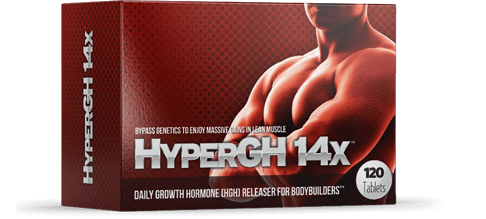
This is the logic behind Hyper GH 14X, developed by Leading Edge Health — a company with over 20 years of experience in men’s health supplementation.
How Hyper GH 14X targets both natural HGH peaks
HGH isn’t released continuously. It comes in pulses, and there are two daily windows where those pulses are significantly more intense. Hyper GH 14X was specifically formulated to amplify both:
Peak 1 — During and after training (EIGR)
The phenomenon known as EIGR (Exercise-Induced Growth Hormone Response) refers to the spike in HGH triggered by resistance training. Studies published in the Journal of Clinical Endocrinology & Metabolism (Felsing et al., 1992) confirmed that high-intensity workouts trigger significant GH pulses immediately after exercise.
The first dose of Hyper GH 14X is taken before training. The 15 natural precursors in the formula — including L-Arginine (520mg), L-Glutamine, and Alpha-GPC — are active exactly when exercise triggers the GH release, amplifying that natural peak.
Alpha-GPC, delivered via the oral spray, carries particularly strong evidence: a randomized double-blind crossover study published in the Journal of the International Society of Sports Nutrition (Ziegenfuss et al., 2008) found that 600mg of Alpha-GPC taken 90 minutes before training increased GH secretion by up to 44 times above baseline during exercise — compared to 2.6 times in the placebo group.
Peak 2 — During deep sleep (circadian rhythm)
Research published on NCBI confirms that the largest daily HGH pulse occurs during the first hour of deep sleep — typically between midnight and 1am. The amplitude of that pulse depends directly on slow-wave sleep quality.
The second dose is taken before bed. Ingredients like GABA (200mg) and L-Glycine (460mg) work on two fronts: stimulating the pituitary during sleep and improving sleep quality itself — creating the conditions for the strongest possible overnight pulse.
A study published in the Journal of Pharmacological Sciences (Bannai & Kawai, 2012) confirmed that glycine objectively improves sleep quality — and since the overnight HGH pulse depends directly on deep sleep, this translates directly into greater hormonal output.
You can review the full ingredient breakdown and dosing protocol directly on the official Hyper GH 14X website.
The enteric absorption system
One technical detail that sets Hyper GH 14X apart: the capsules use pharmaceutical-grade enteric coating — a technology that shields the active ingredients from stomach acid and delivers them directly to the small intestine for absorption. According to the manufacturer, this raises absorption from 10–15% (typical in uncoated supplements) to 80–90%.
What to expect — and when
Natural HGH precursors work cumulatively. The body needs time to respond to the new hormonal stimulus. Hyper GH 14X users typically report the following progression:
Weeks 1–2
Noticeable improvement in sleep quality. Waking up more rested. Reduction in general fatigue. These are the first signs that the overnight component is working.
Weeks 3–5
Faster recovery between training sessions. More energy and intensity during workouts. A sense that training is “working again” the way it used to.
Month 2–3
Body composition changes begin to show: better muscle definition, reduction in abdominal fat, increased strength on major compound lifts.
Month 3–6
Consolidated results for users who maintained consistent training and followed the protocol. This is the recommended period for a full assessment of the supplement’s effects.
Hyper GH 14X is sold exclusively through the official website — ensuring the original product, a 67-day money-back guarantee, and the best bulk pricing available.
Guarantee and where to buy
The manufacturer offers a full money-back guarantee within 67 days — enough time to test two complete months of the protocol with zero financial risk. If you don’t experience noticeable results in that period, the refund is complete and no questions are asked.
The recommendation is to buy directly through the official Hyper GH 14X website. Purchases on marketplaces like Amazon and eBay involve unauthorized resellers — and there are recurring reports of counterfeit products or packages sold outside the guarantee window.
| Package | Duration | Approx. monthly cost | Best for |
|---|---|---|---|
| Silver | 1 month | ~$69.95 | Initial trial |
| Gold | 3 months | ~$66.65 | Minimum recommended trial |
| Platinum Best value | 6 months | ~$58.33 | Full, consolidated results |
This article is for informational and educational purposes only. It does not substitute medical evaluation. Dietary supplements are not drugs and are not intended to diagnose, treat, cure, or prevent any disease. The author may receive a commission for referrals to products mentioned in this article. Individual results vary.
Scientific sources
- [1] Rudman D et al. Effects of human growth hormone in men over 60 years old. N Engl J Med. 1990;323(1):1–6. pubmed.ncbi.nlm.nih.gov/2355952
- [2] Toogood AA, O’Neill PA, Shalet SM. Beyond the somatopause: growth hormone deficiency in adults over the age of 60 years. J Clin Endocrinol Metab. 1996;81(2):460–465. pubmed.ncbi.nlm.nih.gov/8636250
- [3] NCBI / Endotext — Growth Hormone and Aging. After the third decade of life, GH secretion declines about 15% per decade. ncbi.nlm.nih.gov/books/NBK279163
- [4] Veldhuis JD et al. Growth hormone in the aging male. Best Pract Res Clin Endocrinol Metab. 2013. PMC3940699. pmc.ncbi.nlm.nih.gov/PMC3940699
- [5] Baumgartner RN et al. Muscle tissue changes with aging. PMC2804956. Muscle mass decreases ~3–8% per decade after age 30. pmc.ncbi.nlm.nih.gov/PMC2804956
- [6] Harvard Health — Preserve your muscle mass. Most men will lose about 30% of muscle mass during their lifetimes. health.harvard.edu
- [7] Felsing NE, Brasel JA, Cooper DM. Effect of low and high intensity exercise on circulating growth hormone in men. J Clin Endocrinol Metab. 1992;75(1):157–162. pubmed.ncbi.nlm.nih.gov/1619005
- [8] Ziegenfuss T, Landis J, Hofheins J. Acute supplementation with alpha-glycerylphosphorylcholine augments growth hormone response to resistance exercise. J Int Soc Sports Nutr. 2008;5(S1):P15. jissn.biomedcentral.com
- [9] Bannai M, Kawai N. New therapeutic strategy for amino acid medicine: glycine improves the quality of sleep. J Pharmacol Sci. 2012;118(2):145–148. pubmed.ncbi.nlm.nih.gov/22293292
- [10] Powers ME et al. Growth hormone isoform responses to GABA ingestion at rest and after exercise. Med Sci Sports Exerc. 2008;40(1):104–110. pubmed.ncbi.nlm.nih.gov/18157123