By Nutravill Editorial Team | Last updated: April 2026 This post contains affiliate links. See our Affiliate Disclosure for details.
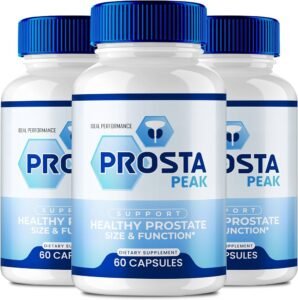
Twenty ingredients in a single prostate supplement sounds impressive. But the question worth asking is not “how many?” — it’s “how well does each one work at the dose it’s actually present in?”
Prosta Peak is one of the more ambitious prostate supplements on the market in terms of ingredient count. It combines botanical extracts, minerals, antioxidants, and immune-modulating compounds in a formula designed to address multiple pathways of prostate health simultaneously.
This review examines whether that ambition is backed by science — ingredient by ingredient, honestly.
At a Glance
Overall Rating: ★★★★☆ 3.9 / 5
| What We Found | Detail |
|---|---|
| Strongest ingredients | Pygeum, Beta-Sitosterol, Green Tea Extract (EGCG), Zinc, Selenium |
| Weakest ingredients | Saw Palmetto (recent evidence disappointing), Soursop (minimal human data) |
| Formula transparency | Moderate — key ingredients listed, exact doses proprietary |
| Best use case | Men 40+ with mild urinary symptoms wanting broad-spectrum natural support |
| Realistic timeline | 4–10 weeks for noticeable improvement |
| Money-back guarantee | 180 days — one of the longest in the category |
→ Check Current Price on the Official Website
Why 20 Ingredients? The Logic and the Risk
Prosta Peak’s 20+ ingredient formula reflects a real insight: prostate problems in aging men rarely have a single cause. BPH involves DHT accumulation, chronic inflammation, oxidative stress, and age-related tissue changes happening simultaneously. A narrow single-ingredient formula can address one pathway while leaving others untouched.
The risk of a 20-ingredient formula is the opposite: spreading the total dose across too many compounds, leaving each one below its individually effective threshold. A formula with 20 ingredients at trace amounts may produce less benefit than one with 5 ingredients at meaningful doses.
Whether Prosta Peak navigates this tradeoff successfully depends on which ingredients are present at what doses — information the proprietary formula only partially discloses. What we can evaluate is the scientific case for each named ingredient and whether the combination approach is mechanistically coherent.
The Prostate Pathway Map
Prosta Peak’s formula appears to target five distinct biological pathways simultaneously:
Pathway 1 — DHT Management: Saw Palmetto, Beta-Sitosterol (5-alpha reductase inhibition)
Pathway 2 — Anti-inflammation: Green Tea Extract, Cat’s Claw, Raspberry (reducing inflammatory signaling in prostate tissue)
Pathway 3 — Urinary mechanics: Pygeum, Stinging Nettle Root (bladder muscle tone, urinary flow)
Pathway 4 — Cellular protection: EGCG from Green Tea, Soursop, Selenium (antioxidant defense against oxidative damage)
Pathway 5 — Hormonal and nutritional support: Zinc, Vitamin D, Vitamin B6 (testosterone balance, immune function, cellular metabolism)
This multi-pathway approach is conceptually sound. The question is execution.
Ingredient-by-Ingredient Evidence
Pygeum Africanum — One of the Formula’s Strongest Components
Pygeum is extracted from the bark of the African cherry tree (Prunus africana) and has over 40 years of clinical use in European phytotherapy for BPH. It works primarily through anti-inflammatory mechanisms — reducing prostaglandin levels in prostate tissue and inhibiting growth factors that promote prostate cell proliferation.
A systematic review and quantitative meta-analysis published in the American Journal of Medicine analyzed 18 randomized controlled trials involving 1,562 men with BPH. Men receiving pygeum were more than twice as likely to report improvement in overall symptoms. Nocturia improved by 19%, peak urine flow by 23%, and residual urine volume decreased by 24% compared to placebo. [1]
The honest nuance: Most pygeum studies used standardized European pharmaceutical preparations at specific doses. Whether the form and dose in Prosta Peak matches these research-grade preparations is not fully disclosed. The ingredient itself, however, has among the most consistent evidence of any prostate botanical.
Beta-Sitosterol — The Most Evidence-Backed Ingredient for Urinary Flow
Beta-sitosterol is a plant sterol with a Cochrane-level evidence base for BPH symptom improvement. The systematic review published in BJU International covering four randomized, placebo-controlled trials found statistically significant improvements in IPSS scores (-4.9 points), peak urine flow (+3.91 mL/sec), and residual volume (-28.62 mL) compared to placebo. [2]
An important finding from this review: beta-sitosterol does not reduce prostate size — it improves urinary symptoms and flow without reversing the structural enlargement. This sets the right expectation for what Prosta Peak can achieve with this ingredient.
Green Tea Extract — The Antioxidant and Anti-inflammatory Bridge
Green tea’s prostate-relevant effects come primarily from its catechin content, particularly EGCG (epigallocatechin-3-gallate). EGCG has been studied for both BPH and prostate cancer prevention.
A randomized, placebo-controlled trial published in Cancer Prevention Research enrolled 60 men with high-grade prostate intraepithelial neoplasia — a pre-cancerous condition. Those receiving green tea catechins (600mg/day for 12 months) showed significantly lower rates of prostate cancer progression compared to placebo (1 vs 9 cases, p<0.01). While this is a cancer prevention context rather than BPH treatment, it demonstrates EGCG’s biological activity in prostate tissue. [3]
A review published in Molecular Nutrition & Food Research confirmed that green tea polyphenols reduce inflammatory markers in prostate tissue through inhibition of NF-κB — one of the primary inflammatory signaling pathways in BPH. [4]
Honest assessment: Green tea extract is one of the more interesting inclusions in Prosta Peak because it bridges the anti-inflammatory, antioxidant, and potentially anti-proliferative aspects of prostate health. The evidence is more robust in the cancer prevention context than in BPH symptom relief specifically, but the inflammatory mechanisms are relevant to both.
Cat’s Claw (Uncaria tomentosa)
Cat’s claw is a South American vine used in traditional medicine for its anti-inflammatory and immune-modulating properties. It contains alkaloids and oxindole compounds that inhibit pro-inflammatory cytokines including TNF-alpha and IL-6.
A randomized, double-blind, placebo-controlled study published in Phytomedicine found that cat’s claw extract significantly reduced pain and inflammation in patients with osteoarthritis compared to placebo. [5] The anti-inflammatory mechanism is consistent but the specific prostate application has not been directly studied in randomized human trials.
Honest assessment: Cat’s claw’s anti-inflammatory mechanism is legitimate and relevant to prostate tissue inflammation. Direct human RCT evidence for prostate applications is not yet available. Its inclusion adds anti-inflammatory breadth to the formula beyond what the standard saw palmetto/pygeum combination provides.
Saw Palmetto — The Most Famous, Least Reliable
Saw palmetto requires the same honest treatment here as in our Primal Flow review: recent high-quality evidence is disappointing.
A 2023 systematic review of 27 studies concluded that saw palmetto, when administered alone, provides little or no benefit for BPH symptoms. The NCCIH states directly that “we know enough to conclude that saw palmetto is probably not helpful” for urinary symptoms from prostate enlargement. [6]
The 2006 STEP trial, published in the New England Journal of Medicine — the landmark study that changed the scientific consensus — found saw palmetto extract no more effective than placebo in men with moderate to moderately severe BPH. [7]
The important nuance for Prosta Peak: Saw palmetto does have documented 5-alpha reductase inhibiting activity — it is not inert. The discrepancy between its mechanism and its clinical trial results may reflect dose and formulation issues in supplements versus pharmaceutical preparations. But the evidence does not currently support saw palmetto as a reliable symptom reliever at typical supplement doses.
Honest assessment: Saw palmetto is the weakest link in Prosta Peak’s formula from an evidence standpoint — despite being one of its most marketed ingredients.
Zinc
The prostate has the highest zinc concentration of any organ in the human body. Zinc plays critical roles in prostate enzyme function, immune defense within the gland, and regulation of cell growth and death pathways.
Research published in the Journal of Biological Inorganic Chemistry established that zinc accumulation in the prostate is critical for normal function — and that loss of zinc accumulation capacity is an early event in prostate cancer development. [8]
A study published in Journal of Urology found an inverse relationship between dietary zinc intake and prostate cancer risk in a large prospective cohort. [9]
Honest assessment: Zinc’s inclusion is scientifically justified. Men with dietary zinc insufficiency — common in this demographic — benefit most.
Selenium
Selenium is an essential trace mineral with antioxidant properties. Its potential prostate health benefits gained attention from the Nutritional Prevention of Cancer (NPC) trial, which found that selenium supplementation significantly reduced prostate cancer incidence in men with low baseline selenium. [10]
The subsequent SELECT trial (Selenium and Vitamin E Cancer Prevention Trial), however, found no significant reduction in prostate cancer risk with selenium or Vitamin E supplementation in men with adequate baseline selenium — and suggested potential harm at high doses in some subgroups. [11]
Honest assessment: Selenium’s benefit for prostate health is real in men with low baseline levels and potentially counterproductive at high doses in selenium-replete men. Prosta Peak’s likely dose is within safe ranges, but the benefit depends on individual selenium status.
Soursop (Graviola)
Soursop is included primarily as an antioxidant with anti-inflammatory properties. Laboratory studies have suggested cytotoxic activity against cancer cell lines, but human clinical evidence for prostate applications is absent.
Honest assessment: Soursop is the ingredient with the least evidence-based support in the formula. Its inclusion likely reflects traditional use and antioxidant properties rather than prostate-specific clinical data.
Raspberry Extract
Raspberry contains ellagitannins — compounds metabolized by gut bacteria into urolithins, which have been studied for their anti-inflammatory and potentially anti-proliferative effects in prostate tissue. A study published in Cancer Prevention Research found that urolithins affected prostate cancer cell behavior in laboratory conditions. [12]
Honest assessment: Raspberry extract’s inclusion adds antioxidant and anti-inflammatory breadth. The urolithin pathway is mechanistically interesting but human prostate-specific evidence is limited.
Vitamin D, Vitamin B6
Vitamin D receptors in prostate tissue suggest a regulatory role; epidemiological evidence links low vitamin D to higher BPH and prostate cancer risk. Vitamin B6 supports cellular metabolism and androgen receptor function. Both are reasonable nutritional inclusions for the target demographic.
What Users Actually Experience
The consistent pattern from men using Prosta Peak across multiple review sources:
Weeks 1–3: Some men notice reduced urgency and slightly fewer nighttime trips. Others notice nothing yet.
Weeks 4–8: The majority of positive reviewers report improvements in this window — less nocturia, improved flow, reduced urgency. These are the outcomes best supported by the evidence for beta-sitosterol and pygeum.
Month 3+: Men who continue report sustained improvements. The anti-inflammatory components may contribute to longer-term prostate tissue health beyond symptom relief.
The honest split: Prosta Peak produces meaningful improvement in mild to moderate urinary symptoms for a substantial proportion of users. Men with severe BPH or those expecting dramatic changes quickly are generally disappointed.
Prosta Peak vs. Single-Ingredient Alternatives
Men researching Prosta Peak often wonder whether they’d be better served by a high-dose beta-sitosterol supplement or pygeum alone.
The honest answer: for maximum dose of a single studied compound, a dedicated beta-sitosterol supplement may provide more of that specific compound. But Prosta Peak’s multi-pathway approach — addressing DHT, inflammation, oxidative stress, and nutritional deficiencies together — may be more appropriate for men with multiple contributing factors, which describes most men over 45 with BPH.
The 180-day money-back guarantee makes the trial relatively low-risk compared to multi-month commitments without that protection.
Safety Profile
The ingredients in Prosta Peak have well-established safety profiles individually. The multi-ingredient combination has not been studied for interactions specifically, but no known dangerous interactions exist among the listed compounds at supplement doses.
Precautions:
- Men on blood thinners: cat’s claw and green tea extract may affect platelet function
- Men on hormone therapy or 5-alpha reductase inhibitors: saw palmetto and beta-sitosterol may have additive effects
- PSA testing: some prostate supplement ingredients (particularly saw palmetto) may slightly lower PSA — inform your urologist if you supplement regularly
Pricing
| Package | Price | Monthly Cost | Guarantee |
|---|---|---|---|
| 1 Bottle (1 month) | ~$69 | $69 | 180 days |
| 3 Bottles (3 months) | ~$177 | ~$59 | 180 days |
| 6 Bottles (6 months) | ~$294 | ~$49 | 180 days |
The 180-day money-back guarantee is notably longer than most competitors in this category — reducing the financial risk of a multi-month trial considerably.
→ Check Current Pricing on the Official Website
The Honest Bottom Line
Prosta Peak’s 20-ingredient formula is more ambitious than most prostate supplements — and the ambition is partially rewarded by the science. Beta-sitosterol and pygeum, which carry the formula’s strongest evidence, are included alongside green tea extract, zinc, and selenium — all with legitimate mechanistic relevance to prostate health.
The formula is weakened by saw palmetto’s disappointing recent evidence and soursop’s minimal human data. The proprietary blend structure prevents full dose verification for each ingredient.
For men with mild to moderate urinary symptoms wanting broad-spectrum botanical support — and willing to give it 60 to 90 days — Prosta Peak is a legitimate option with a long guarantee that reduces the financial risk of trying it.
It is not a substitute for medical evaluation, and it will not reverse advanced BPH. But as a daily natural support supplement for the early to moderate stages of prostate-related urinary changes, it represents a well-intentioned and reasonably evidence-supported formulation.
Overall Rating: ★★★★☆ 3.9 / 5
→ Check Current Price & Availability on the Official Website
Sources
- Ishani A, MacDonald R, Nelson D, Rutks I, Wilt TJ. Pygeum africanum for the treatment of patients with benign prostatic hyperplasia: a systematic review and quantitative meta-analysis. Am J Med. 2000;109(8):654–664. https://pubmed.ncbi.nlm.nih.gov/11099686/
- Wilt T, Ishani A, MacDonald R, et al. Beta-sitosterols for benign prostatic hyperplasia. Cochrane Database Syst Rev. 2000;(2):CD001043. https://pubmed.ncbi.nlm.nih.gov/10796740/
- Brausi M, Rizzi F, Bettuzzi S. Chemoprevention of human prostate cancer by green tea catechins: two years later. A follow-up update. Eur Urol. 2008;54(2):472–473. https://pubmed.ncbi.nlm.nih.gov/18406041/
- Henning SM, Wang P, Said J, et al. Polyphenols in brewed green tea inhibit prostate tumor xenograft growth by localizing to the tumor and decreasing oxidative stress and angiogenesis. J Nutr Biochem. 2012;23(11):1537–1542. https://pubmed.ncbi.nlm.nih.gov/22365437/
- Piscoya J, Rodriguez Z, Bustamante SA, Okuhama NN, Miller MJ, Sandoval M. Efficacy and safety of freeze-dried cat’s claw in osteoarthritis of the knee. Inflammopharmacology. 2001;9(1–2):127–137. https://pubmed.ncbi.nlm.nih.gov/17716581/
- NCCIH. Saw Palmetto: Usefulness and Safety. 2023. https://www.nccih.nih.gov/health/saw-palmetto
- Bent S, Kane C, Shinohara K, et al. Saw palmetto for benign prostatic hyperplasia. N Engl J Med. 2006;354(6):557–566. https://pubmed.ncbi.nlm.nih.gov/16467543/
- Costello LC, Franklin RB. Zinc is decreased in prostate cancer: an established relationship of prostate cancer! J Biol Inorg Chem. 2011;16(1):3–8. https://pubmed.ncbi.nlm.nih.gov/21140177/
- Leitzmann MF, Stampfer MJ, Wu K, Colditz GA, Willett WC, Giovannucci EL. Zinc supplement use and risk of prostate cancer. J Natl Cancer Inst. 2003;95(13):1004–1007. https://pubmed.ncbi.nlm.nih.gov/12837837/
- Clark LC, Combs GF Jr, Turnbull BW, et al. Effects of selenium supplementation for cancer prevention in patients with carcinoma of the skin. A randomized controlled trial. JAMA. 1996;276(24):1957–1963. https://pubmed.ncbi.nlm.nih.gov/8971064/
- Lippman SM, Klein EA, Goodman PJ, et al. Effect of selenium and vitamin E on risk of prostate cancer and other cancers: the Selenium and Vitamin E Cancer Prevention Trial (SELECT). JAMA. 2009;301(1):39–51. https://pubmed.ncbi.nlm.nih.gov/19066370/
- Seeram NP, Adams LS, Henning SM, et al. In vitro antiproliferative, apoptotic and antioxidant activities of punicalagin, ellagic acid and a total pomegranate tannin extract are enhanced in combination with other polyphenols as found in pomegranate juice. J Nutr Biochem. 2005;16(6):360–367. Referenced in urolithin prostate research context.