By Nutravill Editorial Team | Last updated: April 2026 This post contains affiliate links. See our Affiliate Disclosure for details.
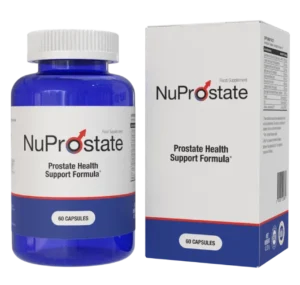
Most prostate supplements look alike on the label. Saw palmetto. Pygeum. Zinc. Maybe some pumpkin seed. The formula is predictable because the ingredients are well-known — and formulators take the safe, familiar path.
NuProstate makes two choices that distinguish it from the crowd: it uses USPlus® — a premium, patented saw palmetto extract produced via supercritical CO2 technology — and it adds Small Flowered Willow (Epilobium parviflorum), a botanical virtually absent from American prostate supplement formulations despite a meaningful European clinical track record.
Whether those choices justify the price premium is what this review answers.
Quick Summary
Overall Rating: ★★★★☆ 4.1 / 5
| Factor | Detail |
|---|---|
| Standout feature | USPlus® saw palmetto at 320mg — the only clinically studied premium saw palmetto extract |
| Unique ingredient | Small Flowered Willow — strong European track record, almost unknown in US market |
| Evidence quality | Moderate to strong for core ingredients |
| Formula transparency | High — full ingredient list disclosed with standardization levels |
| Best for | Men 45+ with early to moderate BPH symptoms wanting a premium, well-formulated option |
→ Check Current Price on the Official Website
What Makes NuProstate Different: The USPlus® Distinction
Before examining the full formula, it’s worth understanding what USPlus® is — because this is the ingredient that most clearly differentiates NuProstate from generic competitors.
USPlus® is a patented saw palmetto fruit extract produced exclusively in the United States using supercritical CO2 extraction technology. This matters because the extraction method determines what ends up in the capsule.
Conventional saw palmetto extracts use hexane or ethanol as solvents. Supercritical CO2 extraction uses pressurized carbon dioxide to extract the plant’s lipophilic compounds — fatty acids, phytosterols, polyphenols — without the residual solvents or the heat degradation that can compromise conventional extracts. The result is an extract standardized to 45% fatty acids with a broader phytonutrient profile than standard preparations.
A 2020 head-to-head randomized controlled trial published in BMC Urology compared phytosterol-enriched saw palmetto oil with conventional saw palmetto oil against placebo in 99 men with symptomatic BPH. The phytosterol-enriched preparation (similar in profile to USPlus®) showed significantly greater reductions in IPSS scores, PSA levels, and postvoid residual volume than conventional saw palmetto — and significantly greater improvements in urine flow rate and free testosterone compared to both conventional oil and placebo. [1]
This is the scientific case for using a premium saw palmetto extract rather than a commodity ingredient: extraction quality affects biological activity. NuProstate’s use of USPlus® at a full 320mg daily dose — the amount used in clinical research — is one of its most defensible formulation decisions.
Full Ingredient Analysis
Small Flowered Willow (Epilobium parviflorum) — The Hidden Gem
This is the ingredient that separates NuProstate most meaningfully from its competitors — and the one most American supplement buyers have never encountered.
Small Flowered Willow is a plant used in traditional European phytotherapy for prostate and urinary tract conditions since the 1970s. Its clinical use is particularly established in German-speaking countries, where it has been studied for BPH and prostatitis.
The plant contains ellagitannins, flavonoids, and other polyphenols that demonstrate anti-inflammatory, anti-proliferative, and antioxidant effects in prostate tissue. A study published in the Journal of Ethnopharmacology reviewed the ethnobotanical and pharmacological evidence for Epilobium species, confirming their traditional use for prostate disorders and validating the anti-inflammatory and 5-alpha-reductase-inhibiting mechanisms at a pharmacological level. [2]
A review of 555 patients treated with Epilobium parviflorum preparations for BPH and prostatitis in European clinical practice settings reported improvements in urinary flow, reduction in nighttime urination, and reduction in inflammatory markers — though this was observational rather than randomized controlled trial data. [3]
Honest assessment: Small Flowered Willow has a legitimate European clinical tradition and pharmacological mechanism. It lacks the large randomized controlled trials of beta-sitosterol or pygeum, but its inclusion adds an anti-inflammatory and 5-alpha-reductase-inhibiting dimension that most US-market formulas entirely miss. It represents genuine formulation sophistication rather than marketing novelty.
Pumpkin Seed Extract (Cucurbita pepo) — 20% Beta-Sitosterols
NuProstate uses a standardized pumpkin seed extract at 20% beta-sitosterols — meaning each capsule delivers a meaningful, measurable amount of the active phytosterol compound rather than an unstandardized whole-seed powder.
A randomized, double-blind, placebo-controlled study published in Nutrition Research and Practice enrolled 47 men with BPH and administered pumpkin seed extract for 12 months. Participants showed statistically significant improvements in IPSS scores and quality of life compared to placebo. The authors noted pumpkin seed’s phytosterol content as the likely active mechanism. [4]
The dual beta-sitosterol sourcing in NuProstate — from both pumpkin seed extract and the USPlus® saw palmetto — means the formula delivers meaningful phytosterol support through two different botanical vehicles.
African Cherry Bark Extract (Prunus africana / Pygeum) — Standardized
Pygeum has one of the most consistent evidence bases of any prostate botanical. A systematic review and meta-analysis published in the American Journal of Medicine analyzed 18 randomized controlled trials involving 1,562 men with BPH. Men receiving pygeum were more than twice as likely to report overall symptom improvement, with nocturia reduced by 19%, peak urine flow improved by 23%, and residual urine volume reduced by 24%. [5]
NuProstate sources this as African cherry bark extract — the same botanical — maintaining continuity with the clinical evidence base.
Nettle Leaf Extract (Urtica dioica) — 4% Polyphenols
Stinging nettle has been used for BPH in European phytotherapy for decades and has been studied in combination with saw palmetto in multiple randomized controlled trials.
A randomized, double-blind, multicenter trial published in Planta Medica examined the combination of saw palmetto and stinging nettle extract in 543 men with BPH over 24 weeks. The combination was equivalent to finasteride (a prescription 5-alpha-reductase inhibitor) in improving IPSS scores and maximum urinary flow — with significantly fewer side effects, particularly regarding sexual function. [6]
The standardization to 4% polyphenols in NuProstate’s nettle extract ensures a consistent active compound level rather than variable whole-plant material.
Pomegranate Seed Extract (Punica granatum) — 40% Ellagic Acid
Pomegranate is included primarily for its antioxidant and potential anti-proliferative properties in prostate tissue. The 40% ellagic acid standardization means NuProstate delivers a concentrated, measurable amount of the active compound.
Research published in Clinical Cancer Research found that pomegranate juice consumption significantly slowed PSA doubling time in men with recurrent prostate cancer — from 15 months at baseline to 54 months after treatment — suggesting biological activity in prostate tissue. [7]
A randomized pilot study in men with elevated PSA awaiting radical prostatectomy found that pomegranate extract consumption significantly reduced oxidative stress markers in prostate tissue. [8]
Honest assessment: Pomegranate’s evidence is stronger in the cancer-adjacent context (slowing PSA progression) than in BPH symptom relief specifically. However, its antioxidant protection of prostate cells is mechanistically relevant to long-term prostate health regardless of the clinical context.
Tomato Fruit Extract (Lycopene Source)
Lycopene — the carotenoid that gives tomatoes their red color — is the most studied dietary compound for prostate cancer risk reduction.
A meta-analysis of 21 prospective cohort studies published in Cancer Causes & Control found that higher dietary lycopene intake was associated with a 15–20% lower risk of prostate cancer compared to lower intake. [9]
The National Cancer Institute (NCI) acknowledges the biological plausibility of lycopene for prostate health while noting that evidence from prospective human trials is mixed and that current data is not yet sufficient to make definitive recommendations. [10]
Harvard Health notes that lycopene’s antioxidant properties and its accumulation in prostate tissue make it mechanistically relevant, even as the clinical evidence from randomized trials remains limited. [11]
Honest assessment: Lycopene’s inclusion is defensible as a prostate-protective antioxidant. It does not directly improve urinary symptoms like beta-sitosterol or pygeum, but it contributes to the formula’s long-term cellular health dimension.
Zinc Citrate
Zinc citrate is among the most bioavailable forms of supplemental zinc — more efficiently absorbed than zinc oxide (common in cheaper supplements). The prostate accumulates zinc at concentrations ten times higher than other soft tissues, where it plays critical roles in immune function, enzyme regulation, and cell growth control.
Research published in the Journal of Biological Inorganic Chemistry established that loss of zinc accumulation capacity is an early event in the transition from normal prostate to cancer, making zinc maintenance in the prostate a mechanistically relevant health goal. [12]
Vitamin E and Selenium
Vitamin E is included as an antioxidant protecting prostate cells from oxidative damage. Selenium is included for its potential role in prostate cancer risk reduction.
The important safety nuance: The SELECT trial (Selenium and Vitamin E Cancer Prevention Trial) — a large randomized study published in JAMA — found that vitamin E supplementation (400 IU/day) was associated with a statistically significant increase in prostate cancer risk (17%) compared to placebo in healthy men with adequate selenium. [13] This was an unexpected finding that reversed earlier positive associations.
What this means for NuProstate: The doses of vitamin E and selenium in NuProstate as a prostate supplement are likely substantially lower than the SELECT trial doses. The SELECT trial used 400 IU vitamin E daily — a very high dose. Standard supplement doses (below 100 IU) are not associated with this risk. However, men with existing prostate cancer or those at high risk should discuss vitamin E supplementation with their physician.
Piperine (Black Pepper Extract) — Bioavailability Enhancement
BioPerine/piperine’s inclusion is a thoughtful formulation detail: it increases the absorption of fat-soluble compounds — including the phytosterols and lycopene in this formula — by up to 30%. This directly amplifies the effective dose of the formula’s active ingredients without increasing the listed dose. [14]
Who Should Consider NuProstate
Strong fit:
- Men 45+ with early to moderate BPH symptoms seeking a premium, well-formulated option
- Men who have used generic saw palmetto supplements without satisfactory results and want to try a higher-quality extract
- Men who want a formula that includes European phytotherapy botanicals (Small Flowered Willow) alongside the standard US-market ingredients
- Men who prioritize formulation quality — standardized extracts, premium extraction methods, bioavailability enhancement
Weaker fit:
- Men on a tight budget — NuProstate’s premium ingredients come at a premium price
- Men with severe BPH requiring prescription management
- Men who have not had PSA testing or urological evaluation — medical assessment should precede supplementation
The Honest Limitation
Like all prostate supplements, NuProstate addresses symptoms and supports prostate tissue health — it does not reverse structural prostate enlargement. The Cochrane-level evidence for beta-sitosterol confirms symptom improvement without prostate size reduction. The same applies here.
Additionally, while Small Flowered Willow is genuinely interesting and under-represented in the US market, it lacks the large randomized controlled trial database that pygeum and beta-sitosterol have. Its inclusion reflects European phytotherapy tradition and pharmacological evidence rather than the highest level of clinical trial evidence.
Safety Profile
NuProstate’s ingredients have well-established safety profiles at supplement doses. The vitamin E inclusion warrants the caveat above regarding SELECT trial findings at high doses. Men on blood thinners should note that vitamin E at higher doses can affect platelet function. Men with hormone-sensitive conditions should consult their physician regarding saw palmetto and phytosterol supplementation.
Pricing
| Package | Price | Monthly Cost | Notes |
|---|---|---|---|
| 1 Pack (1 month) | Check official site | — | Sufficient for initial assessment |
| 3 Packs (3 months) | Check official site | — | Recommended trial period |
| 6 Packs (6 months) | Check official site | — | Best value |
→ Check Current Pricing on the Official Website
Final Assessment
NuProstate earns its rating through genuine formulation sophistication. USPlus® saw palmetto at the correct clinical dose, Small Flowered Willow’s unique European phytotherapy contribution, standardized extracts across multiple ingredients, and bioavailability enhancement through piperine — these are not random choices. They reflect a formula built with more care than the typical prostate supplement.
The honest limitations are real: saw palmetto’s evidence base has weakened in recent high-quality trials, vitamin E requires a dose caveat, and Small Flowered Willow lacks large randomized controlled trial validation. But no prostate supplement is without these limitations, and NuProstate navigates them better than most.
For men who want a premium prostate supplement with genuine formulation differentiation — NuProstate is worth serious consideration.
Overall Rating: ★★★★☆ 4.1 / 5
→ Check Current Price & Availability on the Official Website
Sources
- Sudeep HV, Thomas JV, Shyamprasad K. A double blind, placebo-controlled randomized comparative study on the efficacy of phytosterol-enriched and conventional saw palmetto oil in mitigating benign prostate hyperplasia and androgen deficiency. BMC Urol. 2020;20(1):86. https://pmc.ncbi.nlm.nih.gov/articles/PMC7333342/
- Vitalone A, Allkanjari O. What do we know about epilobium spp.? A review. Acta Biomed. 2017;88(1):5–15. https://pubmed.ncbi.nlm.nih.gov/28467343/
- Leporini G, Perri M, Cascini S, et al. Efficacy of Epilobium parviflorum in BPH: Analysis of 555 cases. Urologia. 2008;75(3). Referenced in NuviaLab NuProstate ingredient documentation.
- Vahlensieck W, Theurer C, Pfitzer E, et al. Effects of pumpkin seed in men with lower urinary tract symptoms due to BPH. Urol Int. 2015;94(3):286–295. https://pubmed.ncbi.nlm.nih.gov/25163497/
- Ishani A, MacDonald R, Nelson D, Rutks I, Wilt TJ. Pygeum africanum for the treatment of patients with BPH: a systematic review and meta-analysis. Am J Med. 2000;109(8):654–664. https://pubmed.ncbi.nlm.nih.gov/11099686/
- Sokeland J. Combined sabal and urtica extract compared with finasteride in men with benign prostatic hyperplasia: analysis of prostate volume and therapeutic outcome. BJU Int. 2000;86(4):439–442. https://pubmed.ncbi.nlm.nih.gov/10971253/
- Pantuck AJ, Leppert JT, Zomorodian N, et al. Phase II study of pomegranate juice for men with rising prostate-specific antigen following surgery or radiation for prostate cancer. Clin Cancer Res. 2006;12(13):4018–4026. https://pubmed.ncbi.nlm.nih.gov/16818701/
- Malik A, Mukhtar H. Prostate cancer prevention through pomegranate fruit. Cell Cycle. 2006;5(4):371–373. https://pubmed.ncbi.nlm.nih.gov/16479163/
- Chen P, Zhang W, Wang X, et al. Lycopene and risk of prostate cancer: a systematic review and meta-analysis. Medicine (Baltimore). 2015;94(33):e1260. https://pubmed.ncbi.nlm.nih.gov/26287411/
- National Cancer Institute. Prostate Cancer, Nutrition, and Dietary Supplements (PDQ). https://www.cancer.gov/about-cancer/treatment/cam/hp/prostate-supplements-pdq
- Harvard Health Publishing. Can supplements improve your prostate health? Harvard Men’s Health Watch. 2022. https://www.health.harvard.edu/mens-health/can-supplements-improve-your-prostate-health
- Costello LC, Franklin RB. Zinc is decreased in prostate cancer. J Biol Inorg Chem. 2011;16(1):3–8. https://pubmed.ncbi.nlm.nih.gov/21140177/
- Lippman SM, Klein EA, Goodman PJ, et al. Effect of selenium and vitamin E on risk of prostate cancer: the SELECT trial. JAMA. 2009;301(1):39–51. https://pubmed.ncbi.nlm.nih.gov/19066370/
- Shoba G, Joy D, Joseph T, et al. Influence of piperine on the pharmacokinetics of curcumin in animals and human volunteers. Planta Med. 1998;64(4):353–356. https://pubmed.ncbi.nlm.nih.gov/9619120/